

 By
By Procrastination is not a laziness problem—it’s a habit problem. Many people delay important tasks not because they can’t do them, but because they feel overwhelmed, distracted, or unmotivated.
The good news is that procrastination can be reduced by building small daily habits. In this article, you’ll learn practical habits to stop procrastination and take action consistently.
Why We Procrastinate
Understanding procrastination is the first step to fixing it.
Common reasons include:
- Fear of failure
- Lack of clarity
- Perfectionism
- Too many distractions
- Low energy
Procrastination is often emotional, not logical.
1. Break Tasks Into Very Small Steps
Big tasks feel overwhelming and trigger avoidance.
Instead of: “Finish the project”
Try: “Work for 10 minutes”
Small steps reduce resistance and build momentum.
2. Use the 5-Minute Rule
Tell yourself:
“I will do this for just 5 minutes.”
Most of the time, once you start, you’ll continue. Starting is the hardest part.
This habit trains your brain to take action without overthinking.
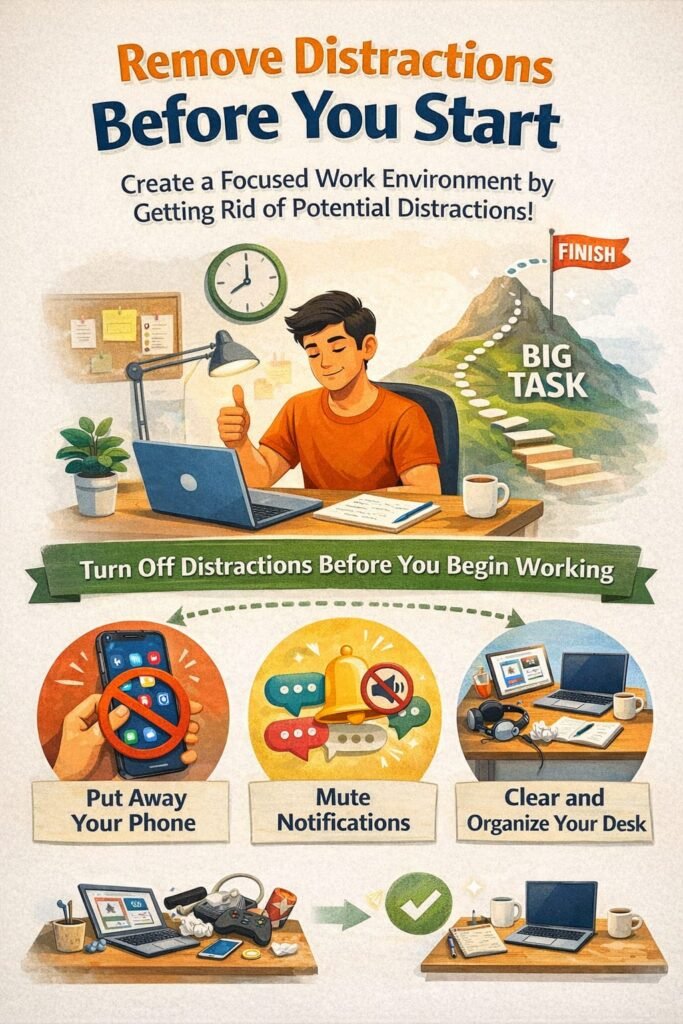
3. Remove Distractions Before You Start
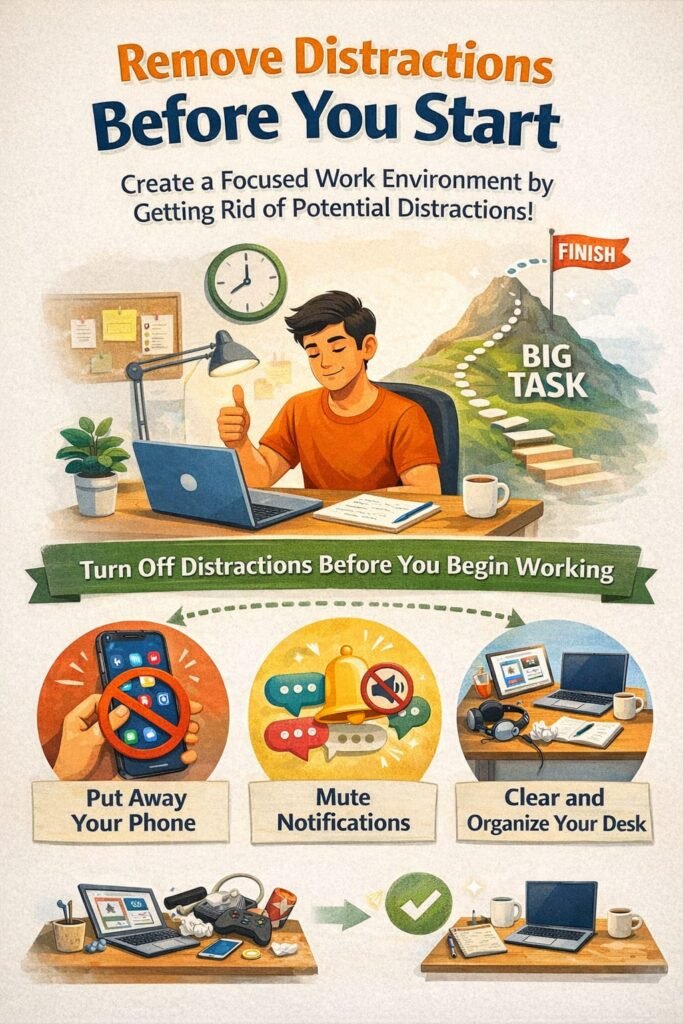
Distractions fuel procrastination.
Before working:
- Put phone on silent
- Close unnecessary tabs
- Clear your workspace
A clean environment supports focused action.
4. Plan Tasks the Night Before
Decision-making in the morning increases procrastination.
Helpful habit:
- Write tomorrow’s top 3 tasks at night
- Keep tasks clear and specific
Clarity reduces delay.
5. Stop Waiting for Motivation
Motivation comes after action, not before.
Successful people:
- Start even when they don’t feel like it
- Rely on habits, not mood
Action creates motivation.
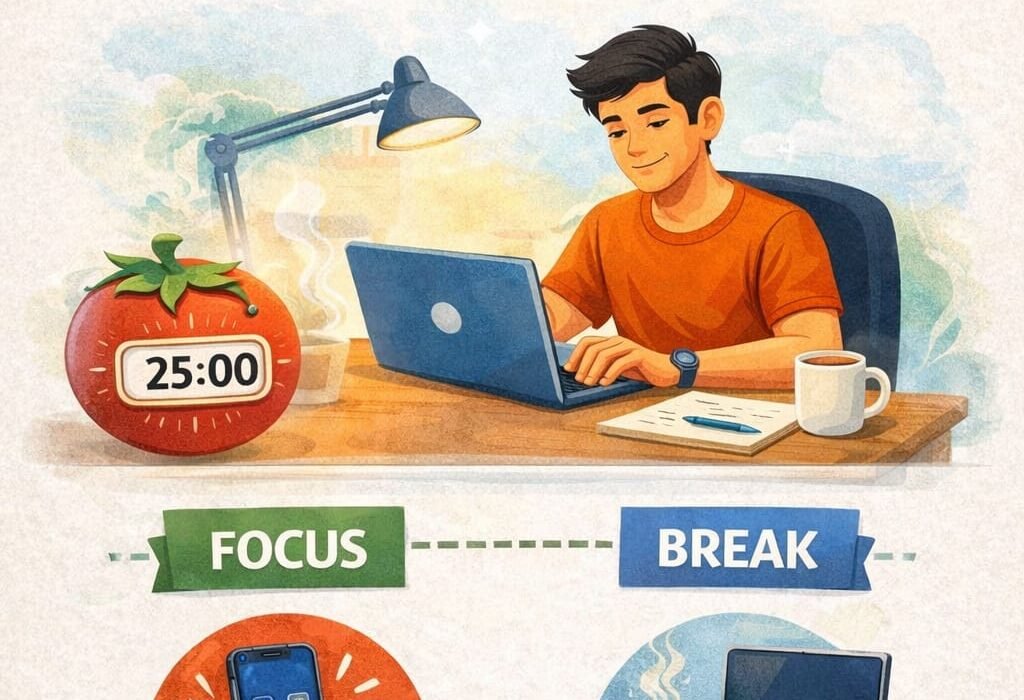
6. Work in Short Focused Sessions
Long working hours increase avoidance.
Try this:
- Work 25–40 minutes
- Take a 5-minute break
- Repeat
Short sessions make work feel manageable.
7. Reward Yourself After Completing Tasks
Your brain responds to rewards.
Simple rewards:
- Short walk
- Tea or coffee break
- Music
- Checking off tasks
Rewards reinforce productive habits.
8. Forgive Yourself and Move On
Beating yourself up increases procrastination.
Instead:
- Accept off days
- Restart quickly
- Focus on consistency
Progress matters more than perfection.
Simple Anti-Procrastination Daily Routine
- Write 3 tasks at night
- Start with a 5-minute rule
- Remove distractions
- Work in short sessions
- Reward completion
Common Procrastination Mistakes
Avoid:
- Waiting for the “right time”
- Overplanning instead of acting
- Multitasking
- Setting unrealistic goals
Simple action beats perfect planning.
Final Thoughts
Procrastination doesn’t disappear overnight. But with small, consistent habits, you can train yourself to take action daily.
Start small. Start now. Momentum will follow.